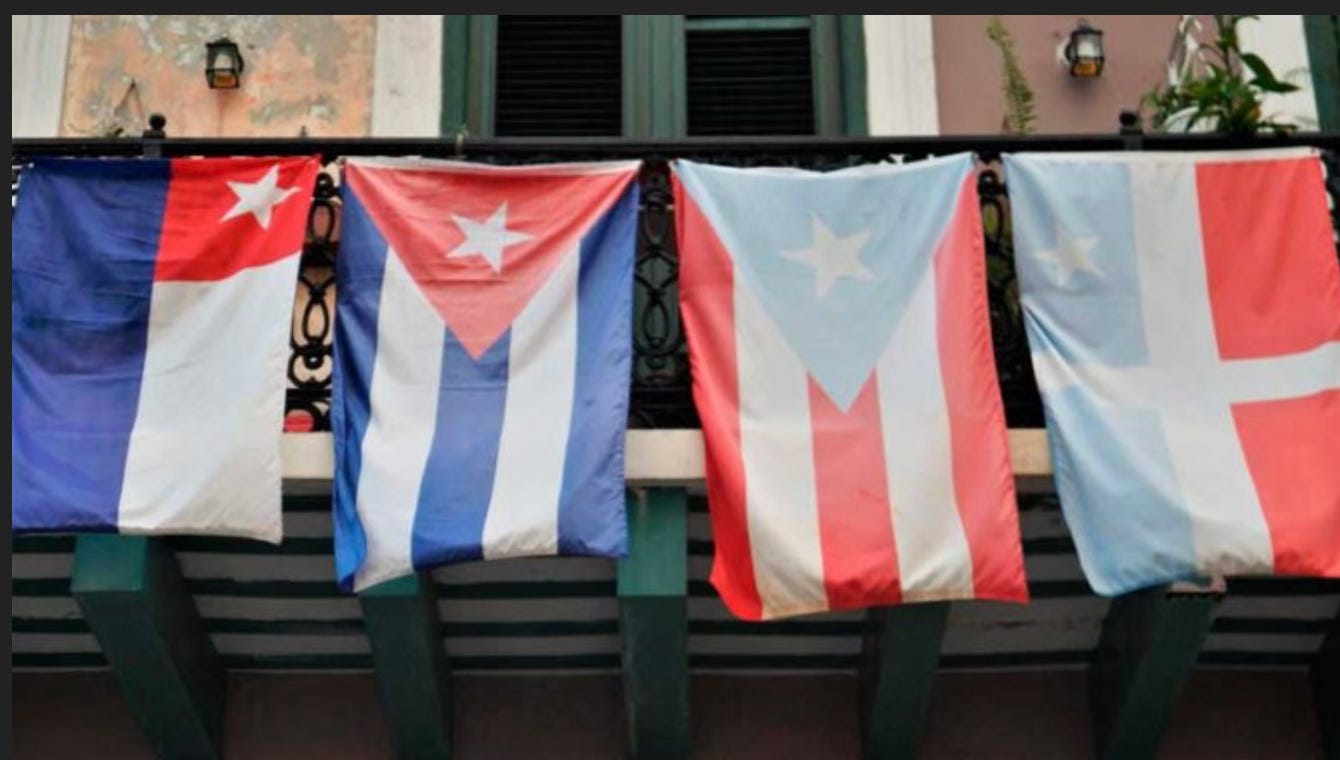
Taking Back the Block:
How New Generation Boricuas Reclaim the Puerto Rican Day Parade Celebrations

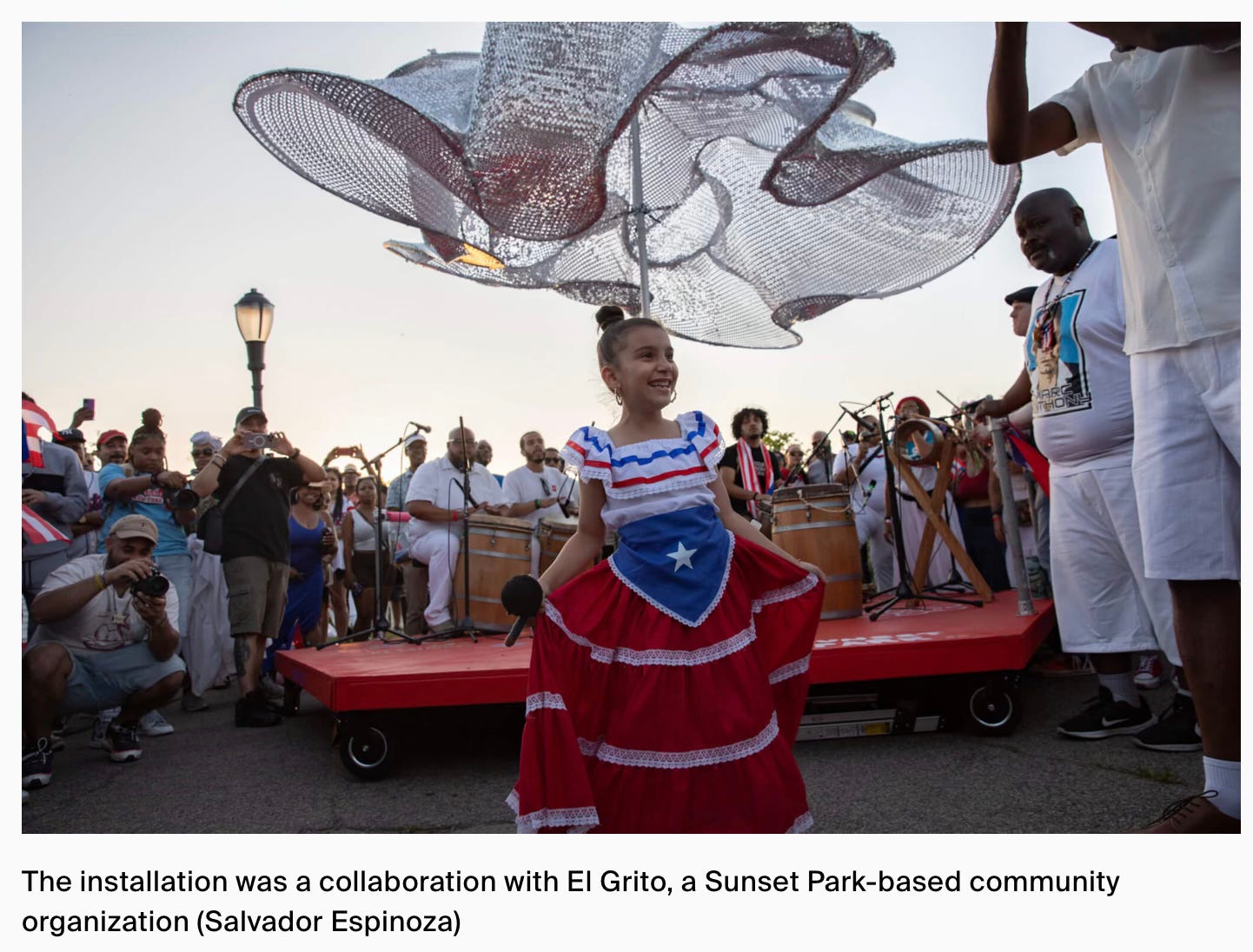
Every second Sunday in June, Fifth Avenue beams with kaleidoscopic tropical colors, swirling multi-hued skirts, and a parade of hundreds of vehicles, motorbikes, and community organizations. Following the aroma of crispy roast pork and fried sweet bananas, afternoon marchers make their way to the hill, cooled by East River breezes that refresh the line of drummers eager for action as they dot the picturesque New York skyline from 59th to 43rd Street along Fifth Avenue in Sunset Park. Yes, this is Brooklyn.
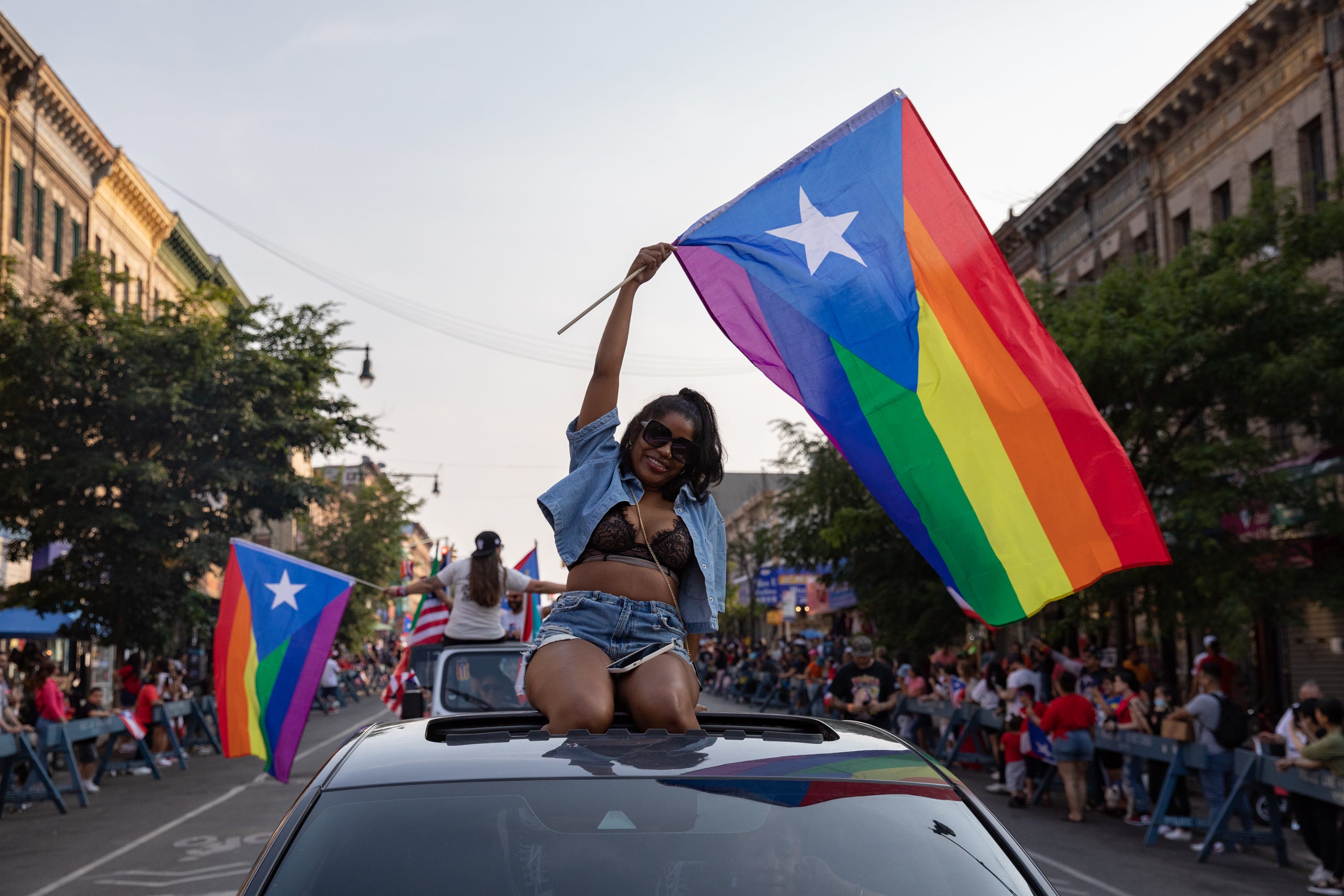
This coming Sunday, June 8, marks the 9th annual Sunset Park Puerto Rican Parade and Festival, kicking off at 5 pm after Manhattan’s main event. Although two years were lost during the pandemic, the community is gearing up for this year's festivities. Despite being threatened that there could only be one parade on that day, the younger generation has taken matters into their own hands, organizing grassroots Puerto Rican Day Parades across Bushwick, the Lower East Side, Long Island, the Bronx, and East Harlem. Today, there are over fifty Puerto Rican Day Parades across the United States, where thousands gather to fly a once-outlawed flag while shouting “!Yo Soy Boricua!!Pa’que tu lo sepas!”
In Manhattan, much of the spillage from the upcoming 68th annual National Puerto Rican Day Parade (NPRDP) is removed brusquely from the 79th Street exit by 3 p.m. Officers aggressively push participants and spectators off the historic blocks and back into "their" communities—a stark contrast to the St. Patrick's Day Parade. There, police assist intoxicated spectators vomiting in the streets, calm rowdy, roving bands of teens openly drinking green beer, allowing celebrants to roam freely across 86th and Lexington, spilling into bars, streets, and parks. Not so with New York's largest and oldest Puerto Rican Day Parade goers, who face early shutdowns and shuttered storefronts—a tradition of exclusion dating back to the first parade in April of 1958.
Following the major event in Manhattan, nearly 20,000 people gather annually in Sunset Park, enriching the celebrations through community participation. There are no corporate floats here, no flashy logos, or competitions for prime spots that demand a $10,000 entry fee for thirty seconds of televised time at the NPRDP. In Sunset Park, progressive community activists and educators are both visible and welcomed along the parade route. They aren't pushed to the end of the parade as they are on Manhattan's Fifth Avenue.
Despite being threatened that there could only be one parade on that day, the younger generation has taken matters into their own hands, organizing grassroots Puerto Rican Day Parades across Bushwick, the Lower East Side, Long Island, the Bronx, and East Harlem. Today, there are over fifty Puerto Rican Day Parades across the United States, where thousands gather to fly a once-outlawed flag while shouting “!Yo Soy Boricua!!Pa’que tu lo sepas!”
Brooklyn’s after-parade and festival offers a rare haven, where joy, music, and cultural pride fill the streets. Inspired by Bad Bunny’s defiant lyric “De Aquí Nadie Me Saca”, the event boldly pushes back against gentrification and heavy-handed policing, emphasizing the message that “No One’s Kicking Us Out.”
Now in its 9th year, the festival has stood its ground against aggressive tactics that threaten this hard-won day of unity. Just ask Dennis Flores, founder of El Grito’s Sunset Park Puerto Rican Parade & Festival. A son of Brooklyn, Dennis was weaned on stories of struggle, culture, and music from his elders. Sprung from that emotional well of history, tears, and angst, he founded El Grito—the “shout” heard throughout a community defending their right to be seen and feel secure. Through El Grito, Flores has dedicated his life to building community while honoring the legacy of resistance passed down to him.
It began on a sweltering June 11, 2000, when a group of young men harassed and robbed women along Manhattan’s NPRDP parade route—an incident that quickly drew media attention. In response, police cracked down on parade-goers and enforced harsh restrictions, despite the lack of visible community affairs officers typically present at other parades.
In the aftermath, Dennis Flores began documenting the disparities. He filmed police conduct at the St. Patrick’s Day Parade, distributed “Know Your Rights” cards in Brooklyn, and organized town halls and demonstrations. He also launched a post-parade celebration on the hottest block in Sunset Park—nicknamed “Vietnam.” ¡Candela!
Flores met with car clubs, gangs, social groups, religious and community organizations. When they gathered at 43rd and Fifth, police were already there, but Flores was prepared. Armed with the First Amendment and 30 community members equipped with cameras, they stood their ground, recording every police action.
Scores of Boricua drummers lined the street. A lane was left open for foot traffic since they could not obtain a permit to close the block. Police surrounded them. They requested a sound permit, required only for amplified sound. But these drummers were unplugged. It was five in the afternoon. They beat ancient African rhythms of resistance. When police threatened to confiscate the drums. The music stopped. Flores argued for their right to assemble. Suddenly, an elderly woman stepped between them and the police, armed with a güiro. Picking up her gourd and scratcher, she announced: “¡A tocar!” Leading the charge, the drummers roared bomba beats of resistance. The police fell back, but Flores knew the tensions hadn’t truly passed.
He organized community meetings to train participants in holding police accountable, recording encounters, and encouraging others to do the same. When he requested a meeting with the National Puerto Rican Day Parade board, they refused. Instead, they sent board member Orlando Plaza to deliver a clear message: they had no intention of associating with Flores—or with any other parade happening in the city that same day.
Flores continued organizing and educating his community, making police filming a critical tool for public safety. By 2014, tensions escalated. Officers turned violent at the sight of cameras pointed at them from every angle.
They charged like a football team, pushing crowds for three blocks while ripping cameras from people’s hands. Many were beaten. One young man had his head split open with a nightstick, then was charged with assaulting an officer who another cop had hit. The charges were later dropped, but the damage was done.
Flores applied for a parade permit but was denied—until he threatened a lawsuit with Brooklyn civil rights attorney Norman Siegel. Though the parade permit was eventually approved, then-Mayor Bill de Blasio, who later wanted to participate in the Sunset Park Puerto Rican Parade when FALN leader Oscar López Rivera appeared at the NPRDP, tried to block it behind the scenes.
Then City Councilmember Carlos Menchaca issued a competing permit allocating $36,000 in discretionary funds to a local woman who had organized a similar festival years earlier. Flores was invited to a subsequent meeting only to be informed that the permit had been awarded to her, despite his earlier application. The Mayor's office stated that the City could not have two parades occurring simultaneously on the same day, although Flores’ was an after-parade celebration. Siegel threatened lawsuit. City officials were forced to approve Flores’ event, but without any funding.
A smear campaign followed. Rumors of impending violence and crime at the Sunset Park parade ran rampant. Still, Flores had established strong ties with motorcycle clubs, schools, churches, and community organizations, all dedicated to supporting the event and ensuring a peaceful day. On parade day, 15,000 people showed up. Even the politicians, lawyers, and NYPD—including its counterterrorism unit—acknowledged Flores for keeping his word of no violence.
Flores, however, was never allocated any discretionary funds. He has raised modest financial support using his own money and savings to keep this festival going. Although the City provides no funding, Flores continues to advocate with them to keep the nearby restrooms in the park open, rather than renting portable toilets, the festival cannot afford.
"The main problem here is that they just don’t like the messenger,” Flores underscored. Indeed, there is a direct correlation between the Sunset Park community activists and the original 1950s founder who researched, organized, and produced the first Puerto Rican Day Parade in New York City: Gilberto Gerena Valentín.
The first Puerto Rican Day Parade was born out of resistance and identity, as Boricuas were American citizens and the majority in New York, outnumbering the many Spaniards and Cuban immigrants already here. In 1954, progressive socialist activist Gilberto Gerena Valentín spearheaded a coalition to establish a separate parade, distinct from the Spanish-dominated Día de la Raza held each October.
As head of the Congreso de Pueblos, an alliance of Boricuas from towns across Puerto Rico, Valentín had commissioned a committee to study the routes of other ethnic parades in the City in 1954. He registered the Committee for the Puerto Rican Day Parade in Albany in 1957—his goal: to celebrate Puerto Rican pride and unity. At the time, a decade-long gag law in Puerto Rico—banning the flag, patriotic songs, and political gatherings—had just been repealed.
Mayor Robert Wagner initially denied a permit for the Puerto Rican Day Parade to use the official St. Patrick’s Day Fifth Avenue route. As a result, the first parade marched through East Harlem—from 116th to 96th Street—on April 13, 1958. The following year, an election year, Wagner reversed course to court Puerto Rican voters, granting access to Fifth Avenue.
But the welcome was hostile. Storefronts from 43rd to 80th Street were boarded up. Anti-Puerto Rican slurs and upside-down flags lined the route. Police allegedly fed their horses laxatives to soil the streets. Wagner’s coat was pulled. If he wanted the Puerto Rican vote, this had to stop!
It was Valentín who, in 1963, unfurled a massive 50-by-35-foot sky blue Puerto Rican flag at the parade, sewn by Boricua women in the garment industry. The sight moved the crowd to tears. So much money was thrown onto the flag marchers struggled to keep it from dragging on the ground. By the end of the parade, $10,000 had been collected.
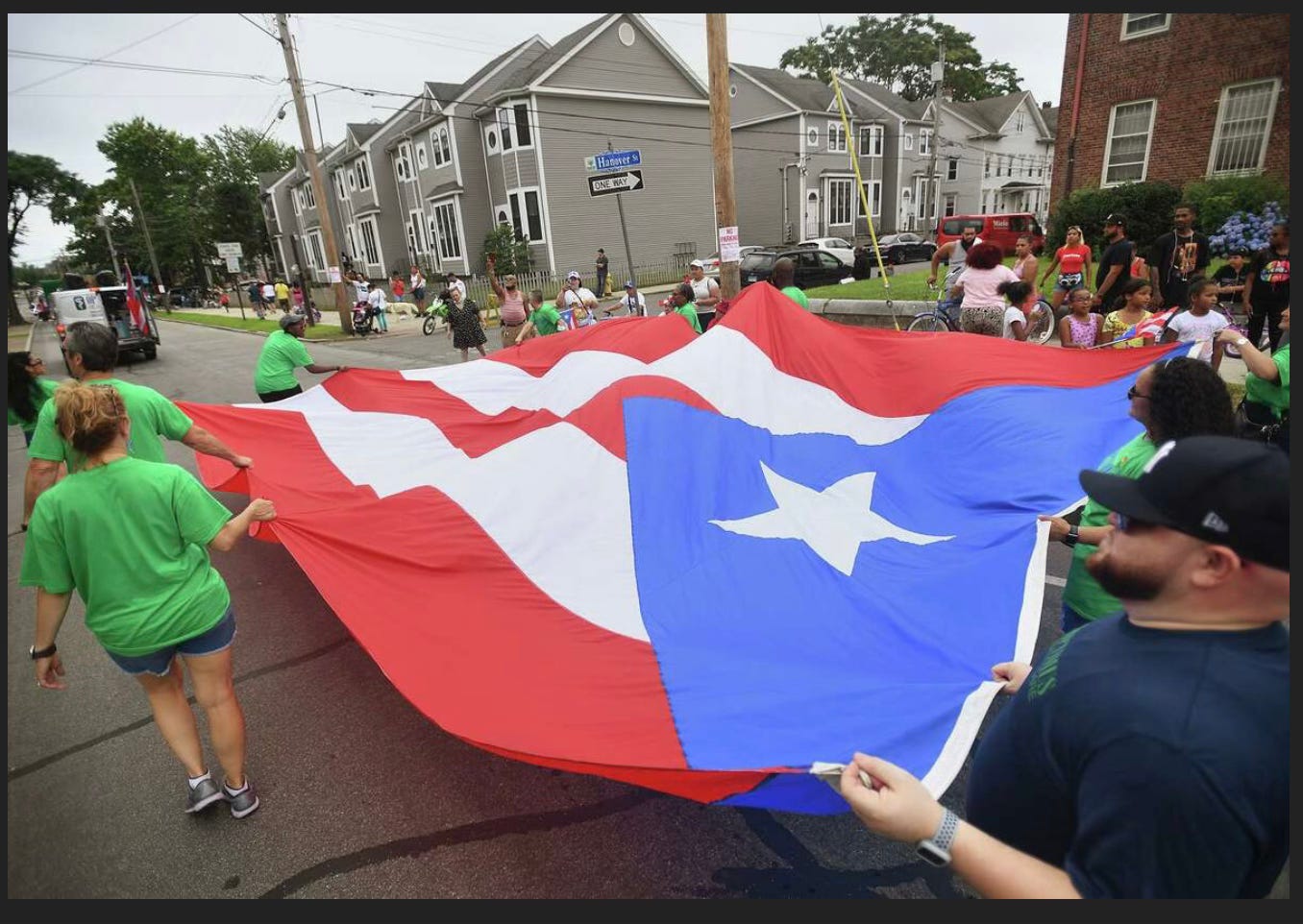
Gerena Valentín coordinated the Puerto Rican Day Parade from 1958 until 1963. He served as its president until 1974—yet his name is erased from the National Puerto Rican Day Parade’s official website.
A proud socialist and civil rights leader, Gilberto Gerena Valentín marched with Dr. King at the historic 1963 March on Washington. He delivered a speech—in Spanish—reportedly unsettling some elitist members of the Parade’s leadership. Today, as the Schomburg Center for Research in Black Culture—founded by Afro-Boricua Arturo Schomburg—celebrates its 2025 centennial, it seeks to participate in this year's Parade. They learned that $10,000 would secure a float and perhaps a few seconds of televised exposure across the reviewing stand.
Amid a wave of overwhelming corporate influence, a new generation of Boricuas is reviving that community pride, authenticity, and unity, bringing the celebrations back to the streets, to their communities, and their hearts, especially when they holla: “¡Yo Soy Boricua. Pa’que tu lo sepas!”